
Digital transformation of the society - one of the key topics of the Forum on the future of learning


It is probably no coincidence that the recent Forum on the Future of Learning was organized on January 24th, which is the first International Day of Education. The latter was proclaimed last December by the United Nations General Assembly in recognition of the importance of education for the global social, economic and environmental development and in support of the implementation of the Sustainable Development Goals – SDGs (Agenda 2030). Namely, the fourth of the 17 SDGs promotes the provision of quality education and lifelong learning for everyone.
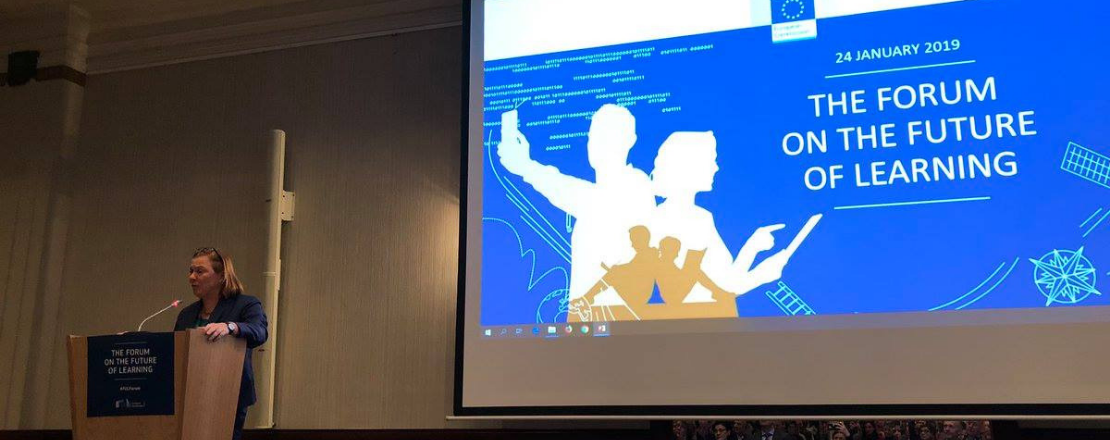
The Forum on the Future of Learning is part of the European Commission's (EC) consultation process, which runs at the breaking point in time when the existing Education and Training 2020 program is coming to an end and a strategic framework for the new decade is being created. An important stakeholder in this process is the European Education and Training Expert Panel (hereinafter: the Panel). This 18-member group, which included a Slovenian, Dr Eva Klemenčič from the Educational Research Institute, from October 2018 to January 2019, considered six topics. They examined the demographic change, inclusion and citizenship, environmental challenges, investment, reform and governance, technological change and the future of work as well as the digitization of society. For each topic, they formulated views on two issues:
- Which of the most important social trends will affect education in the long run and how should European cooperation in this field be best understood?
- What should be the strategic objectives of the European cooperation in education and training until 2030 and what should be the priority areas?
The Panel prepared thematic documents and presentations for the Forum, and on these foundations, discussions were held in the working groups and the smaller panels in the plenary section of the Forum. Below, I will focus on the digitization of the company, and you will be able to read more about the next five topics in the ACS newsletter (for now in Slovenian, since April in English).
The digital transformation of society is a multi-faceted phenomenon
Access to and the use of digital technologies is a precondition for success in the labour market, continuing education and training, the use of e-services in health care, public administration and trade, leisure activities, search and processing of information etc. If digital exclusion in the 1990s was due to lack of access to technology, this is no longer the case in the modern society. Today, for digital integration the most important factor are digital skills. Although these are among the basic skills, research shows that 43% of Europeans do not have them. This is also true for younger generations, who are growing up with these technologies, but use them only for certain, above all social purposes.
At the Forum, we concluded that digital skills should definitely be developed throughout the entire life and in all content areas, and that digitization should cover formal, non-formal and informal learning as well as general and vocational education and training. The target groups of all ages, especially the elderly and other marginalized groups, should be included in order to minimize the digital divide.
Digitization adjusts the learning process to an individual and supports interactivity
Research shows that the effects of modern technology on teaching and learning are diverse, depending on a number of factors whose effects are difficult to delimit. This brings a great challenge for teachers and other educators, as they also need to develop their digital skills, so that the use of modern technology in learning environments will best support the pedagogical process. The role of the teacher is gradually transformed into the role of mentor, which requires a changed mind-set in teachers and their appropriate and continuous professional development.
The mere transfer of the existing learning content into a digital format is of course not sufficient, therefore creating new teaching and learning methodologies requires special attention. It is also important to integrate ICT into career counselling and guidance services in general. This does not just entail providing information to users, but is also about the development and implementation of tools that support these services. The exchange of good European practices has been mentioned several times as an opportunity to bridge the gaps among the Member States in this area.
In a changing world, lifelong learning becomes an indispensable element of life and work. Digital technologies are becoming an ever-growing ally, which makes learning more accessible, more flexible and cheaper. It moves from classrooms into informal learning environments, such as, for example, MOOCs - massive open online courses that allow people to acquire different skills in an easily accessible and flexible way. Increasingly, individuals go through casual forms of learning by using free video content accessible through social networks. All this certainly contributes to the ability of everyone to tailor the content, speed and way of learning to their own needs.
The development of digital skills should be a strategic priority for education in the new decade
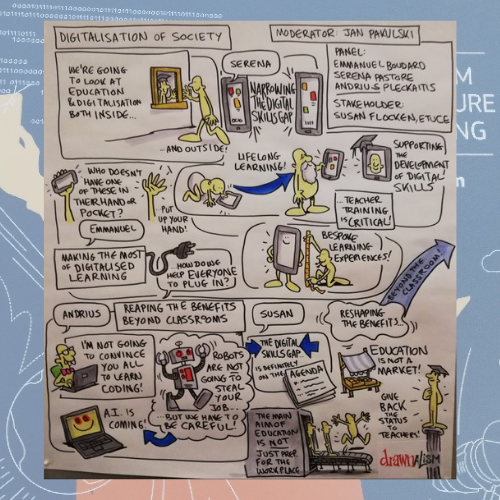
In the area of digitalization of the society and thus also education, the Forum came to the conclusion that the development of digital skills is an imperative for today's and future societies. It should be based on the connection of education with the economy and other social partners, but should not neglect social aspects in any way.
Digitizing society also means that adults will change their jobs several times in their careers and therefore need opportunities for accessing and undergoing retraining. In order to reduce the gap between the needs and the supply of qualifications, the EC could set up a system for forecasting changes and needs in the labour market, which would signal the need for adjustments in the field of education. Then, of course, such adjustment requirements will need to be addressed quickly and flexibly.
The implementation of top-down policy should be met half way through innovative initiatives, which in some places are already working from the bottom to the top, was heard on the Forum. However, there was no shortage of warnings that special attention should be paid to the issues of privacy, security and ethics.
Adult education is “in”!
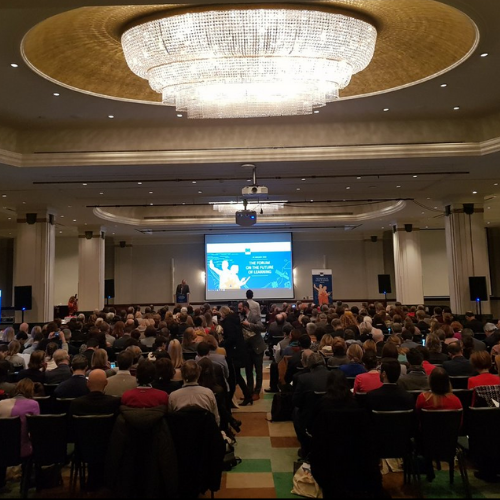
The Forum on the Future of Learning was organized for stakeholders who are active at all levels of the education system. In my experience, the problem of adult education as a rule in such extensive 300-member groups does not seem to get much attention. This time it was different. And it was not the first time! I experienced something similar at the European Week of Vocational Skills, last November in Vienna (article is available here: ACS e-News).
Adult education as a logical continuation of initial education and training and a constituent part of the lifelong learning perspective was mentioned in the Forum in almost every contribution. After all, the name of the Forum as such shows a paradigmatic shift. Exactly a year ago, the EC organized a similar event called the First European Education Summit (see the article on this in ACS e-News - only in Slovene). This time, the same carriers of European education policy preferred to use the term “learning”, which I see as a proof of a new, “life-long” and “life-wide” perspective.
There is a feeling that our area is finally recognized (at least at the European level) as essential, only logical and natural. The politicians finally listened, and financial support has been abundant under the Erasmus + program not only in the recent years – it will be rather high in the coming period. Will we be able to take advantage of these circumstances and turn them into the benefit for our profession, and especially the individual, society, economy etc.?
Zvonka Pangerc Pahernik at ACS works in the field of promotional and information activities. She is a national coordinator for the implementation of the European Agenda for Adult Learning. She is interested in pervasive promotional approaches and the integration and participation of stakeholders in the adult education.
Nóta tráchta


digitization of society